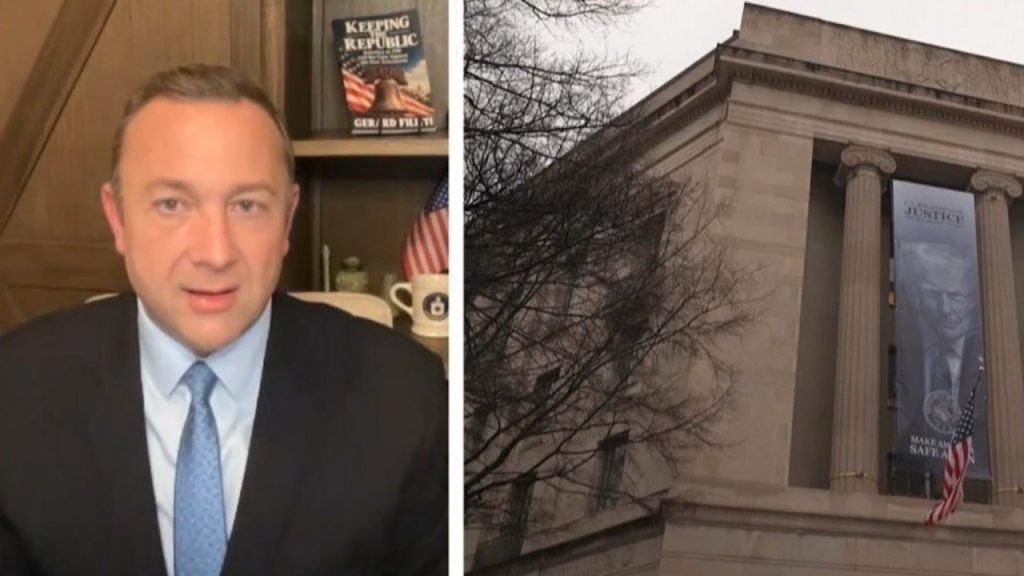
The Drug Enforcement Administration is changing what it hunts. For decades the agency’s public trophies were kingpins, cartel bosses photographed in handcuffs at the top of the trade. DEA Associate Chief of Operations Brian Clark told One America News Network that investigators are now going beyond those bosses to the dealers, businesses and financial networks that keep drugs moving through American communities. The method follows two trails at once: the drugs themselves, and the money they generate. A busy week of arrests, seizures and sentencings in October shows exactly what that strategy looks like in practice.
Follow the Dealers Where They Actually Sell
The street end of the trade no longer works the way it did in the crack era. Much of today’s dealing happens through social media and digital platforms, where a dealer can reach buyers across a region without ever standing on a corner. The DEA’s Operation Central Valley Blues, announced on October 22, was built for that reality, targeting suspected drug and firearms dealers operating online across California. The operation brought together dozens of federal, state and local agencies and produced arrests on a scale that a single-city raid never could. Its haul tells the story of the modern trade: more than 3,200 pounds of narcotics, over 18,000 pills including fentanyl, 43 firearms and more than $338,000 in cash. Clark’s point to OAN was that the dealer layer matters in its own right, because dealers are the connection between cartel supply and American demand.
Follow the Money Until It Hurts
The second trail is the one cartel leaders fear most, because money has to move through systems the government can watch. While agents were sweeping up online dealers in California, a very different case was breaking in Florida. Federal agents arrested Miami-based Pavel Alekseyevich Kulizhnikov on October 20, accusing him in a 44-page affidavit of working as a cryptocurrency broker for a laundering network known as the Just Team. Prosecutors say the network moved millions of dollars a day for drug cartels, including the Sinaloa and Gulf organizations, and also helped clients evade sanctions on Russia. Its couriers and brokers operated across the United States, Colombia, Britain, Spain, Belarus, the Emirates, Australia and Russia. A single arrest in Miami, in other words, was aimed at a pipeline that touched four continents.
The Laundromats Are Getting Sentenced Too
The money side of the strategy is also producing courtroom results, not just arrests. The same week, the DEA announced the sentencing of Shu Jun Zhen, a courier for a Chinese money laundering organization that moved more than $90 million in drug proceeds in under two years. Zhen personally picked up bulk cash from traffickers and deposited roughly $23 million of it, using real and fake identities and shell company accounts. Officials described laundering networks as the lifeblood of the cartels, the service that turns street cash into usable, movable money. Cut that service and a cartel is left rich in currency it cannot spend and poor in everything it needs to buy. That is the logic behind treating bankers and brokers as targets equal to the traffickers themselves.
Why Businesses Are Now Part of the Target List
Clark’s most pointed remark was that the agency is targeting businesses as well as people. Laundering at this scale needs fronts: companies that can receive, layer and explain money that began as drug sales. Shell firms, money-service businesses and crypto brokers give cartel cash a legitimate-looking paper trail, and each one is a fixed address investigators can raid, seize and prosecute. Targeting the business layer also creates pressure that arrests alone do not, because seized accounts and forfeited property strike the organization’s working capital. The cartels adapted to kingpin strategy years ago by making leadership replaceable. It is much harder to replace a trusted laundering network, which takes years of relationships to build and minutes of court orders to freeze.
There is a diplomatic edge to the strategy as well. The laundering cases reaching court this year run through China-linked networks, Gulf-state accounts and Russian sanctions evasion, which puts drug enforcement squarely inside America’s wider economic contest with its rivals. Every laundering indictment therefore does double duty, disrupting cartel finance while exposing the shadow banking channels that sanctioned regimes also use. That overlap is one reason the money cases now draw multi-agency task forces rather than DEA agents alone. It also explains why prosecutors describe these networks in strategic terms, as infrastructure to be dismantled, instead of treating them as ordinary white-collar crime.
What Success Would Actually Look Like
None of this ends the drug trade by itself, and the DEA does not claim otherwise. Fentanyl and methamphetamine remain cheap and available, and every network dismantled leaves a market someone else wants to serve. The test of the new strategy is whether attacking dealers, dollars and pipelines together raises the cost of doing business enough to shrink that market at the margins. October’s cases are the template: an online-dealer sweep in California, a laundering broker arrested in Miami and a courier sentenced in a Chinese-network case, all inside one week. If that tempo holds, the story of American drug enforcement in 2026 will not be a single dramatic kingpin arrest. It will be the slower, quieter work of making the whole pipeline, from the street sale to the shell account, a dangerous place to do business.
Source: One America News Network